Building a company to make money

There are three main models (when looking at the founders point of view):

  1. Build it as big as possible, expand the infrastructure/distribution/value factory, aim to make a little bit on each part in the factory.  Whole aim is around making it bigger than the founders.
  2. Keep it as lean as possible, focus on the small, deliver maximum value.  Aim here deliver tremendous value to make excessive profits.
  3. Build it fast to exit.  Little worries on profitability, reinvest to make profit (for founders) via exit.

Bonus Option
You are so remarkable you create a monopoly.  This adds extra profit in any option (probably mostly in the first option).

Just a few different thoughts/models on how to frame it in your mind.

March 14th, 2010

Going out on your own: Pursuing the Passion 47 & 48

#47: Listen (and really listen)
Listen to your clients, be proactive, give them a call, find out their issues, problems, even if it’s not related to you. This is where your networking can pay off you may know someone that could help them, or a blog post you have read that could.

#48: Don’t pretend
Be yourself, let your business reflect that, you are attractive, maybe not to everyone, but to a big enough group to build a business off.

And that’s it! Well from me anyway.

I wrote this about a year ago one night, when I thought what would I tell someone starting where I started, I hope it’s been of value to you.  If you’d like to read the full thread go here.

Starting out is always tough, it’s not hard though (as millions of other people have gone through exactly the same process) so most of all be prepared to listen, swallow your pride and learn.  I’d rather you became a stellar success than quitting as you weren’t prepared to adapt.

I may turn this into an ebook or short book at some stage (who knows) but if you’ve anything to add or wanted to ask me a question about any of it just send me an email to ben@bwagy.com – let me know how I can help.

March 11th, 2010

McDonalds sucker punches Weight Watchers

Interesting announcement made late last week week, McDonalds (only in New Zealand as far as I know) has added Weight Watchers approved food items to the menu.

Copy/Paste from the NZHerald:

“It seems like an unlikely alliance, but Weight Watchers has backed three items on McDonald’s menu.

From today, New Zealand McDonald’s branches are offering three meals that each add up to 6.5 Weight Watchers’ points.

The meals, the Filet-O-Fish, the Chicken McNuggets and the Sweet Chilli Seared Chicken Wrap, are the same meals McDonald’s customers are used to. But 9000 staff in 150 restaurants around the country have had training to make the meals more consistently, with the same amount of sauce each time, so they fall within the points system.

The system allows those on the Weight Watchers’ programme between 18 and 40 points each day, which they must stay within to obtain and retain their goal weight.

The meals are served with salads and water or diet soft drinks.”

I know why McDonalds did this, easy:

  • Help steer image to healthier products
  • Lend some of Weight Watchers brand values (clearly at a price)
  • Generate word of mouth (hey I’m talking about it)

But mostly provide an excuse for people to go into McDonalds (hey I’m getting the healthy option), really though once people are in there they will grab their regular meal.  McDonalds knows that.  That’s why they run new specials, cheap burgers because they know the biggest challenge is getting people to McDonalds – once there they can sell to them.

If you jump over to Weight Watchers Worldwide the first item on their approach is “learn to handle hunger and beat temptation” – dare I say if you are on Weight Watchers giving McDonalds the tick is totally in no way coherent with your mission.  Weight Watchers endorsing McDonalds…fail.

I don’t really need to explain this any more do I?

McDonalds: 1 Weight Watchers: -1,000,000

Give us your thoughts in the comments below…
March 10th, 2010

If it works first time

Great… but what can you learn from that?

Maybe next step is to try stretch or break it.

That’s where the real learning is.

March 9th, 2010

I have never found this to be false

“The temptation to quit will be greatest just before you are about to succeed” ~Chinese Proverb

March 8th, 2010

Risk Homeostasis [please read now]

Risk Homeostasis is a theory that humans have a certain level of acceptable risk and we will seek to keep that in equilibrium.

If we take high risk in one part of our life we will seek to minimise it in another part.

For example, in a Munich Case Study two groups of taxis were monitored for accidents.  One group had ABS brakes installed, the others stayed with the regular breaks.  You would think then that the ABS guys had less accidents right?

Wrong.  What they found was the accident rate was about the same, the group with ABS having gained better braking would take other risks (ie braking late).

Have a read over at WikiPedia.  Watch my video below on RadioWammo discussing it:

httpv://www.youtube.com/watch?v=nqMQ7yAVNSg

It has interesting implications for all change, innovation and risk when you think about it.

Thanks to Malcolm Gladwell for the inspiration in his latest book What the Dog Saw.

March 7th, 2010

Running Theory

I have a bit of a theory around running

The first run is completely all about what you think you can do.  It doesn’t matter how you fit you are – it’s more about how far you go till your brain says hey buddy it’s time to stop.

The second run (and this can be the very next day) you can magically run up to 1/3 even further.

It’s not that you got more fit overnight – it’s that you realise what you can do and are able to push through it.

Each run for the first week or so is just about stretching ‘what you can do’.

Then you hit your actual limit.  You run at that limit for a few runs.  Take a break.  Come back and own it.

Apply this to most things.  Your performance undoubtedly is what you think you can do rather than what you’re actually capable of.

Never, ever underestimate your potential.

March 4th, 2010

Reflection Day

Please read about the Crazies, they will surely change your perspective (and grow yourself) very rapidly.

Start a blog – even if you don’t share it (although you are missing out) it’ll improve everything you do. Significantly.

What’s happening in the Long Term? The bigger picture? Are your moves of the chess pieces this month helping improve the playing field for your next move?

Rethink your networking ability.

Have you thought about your sales copy? Have you brought it back to the basics? Copy 101.

Thinking about going out on your own? Or plan to one day.  Read my Going out on your own: Pursuing the passion blog post series (hey it’s been going 8 months now) there are some real gems there.

Do not quash the clever guy.

Finally (and most importantly) turn up.  And keep turning up.

March 3rd, 2010

Creating Opportunities

If you want to get from A to B and can’t find a path.

Create one.

March 3rd, 2010

Going out on your own: Pursuing the Passion 44, 45 & 46

#44: Put some good karma out there
Do work for free, help another company that’s growing, if you don’t expect a return and it’s just for fun, much more rewarding, plus it’s free marketing for you.

#45: Leverage your communications
Leverage your story! Blog, podcast, write. Creating media that you write once but that can be read many times is the only way to truly build your business. There is only one you, so leverage your skills.

#46: Testimonials
Don’t be shy to get testimonials, these are a great way to enhance your brand but also when you ask you remind your client how good you actually are.  They also provide reassurance to potential customers and minimise perceived risk.

March 3rd, 2010

What makes an idea worth sharing?

What makes an idea worth sharing? The fact that you’re asking the question.

March 1st, 2010

Using Adwords for Market Research (a startup use case)

I have dozens of Adwords hacks but here’s one that’s hugely valuable for startups that helps you identify very quickly which markets you should be targeting.

  • Set up a Google Adwords campaign using keywords that describe your customers pain points
  • Break it up into regions, measure which get the highest impressions & click throughs, also note the level of competition (important in a crowded market)
  • Run it for a month

You can then narrow it down by region after collecting some data to find the market with the most potential.

I’ve done this numerous times but most recently for a client in an ultra niche market.  Their product is very innovative and only some segments of the market are worth talking to in the early days (the rest require education).  Thus we ran the campaign for a month, found very quickly (for under $200) where the main interest was – a specific country.

We also found out, that there was no competition in the market but also the level of interest which was approximately four times the next highest in the world.

Great – now our client can target an area where there is the absolute most interest.  Thus making growth a bit easier.

February 28th, 2010

Marginal value on Commodity Items

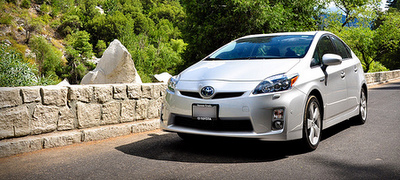
If I gave you $40,000 to go buy a new car, you’d probably go away, scan the car yards and come back with a few options.

You can pretty much guarantee a certain level of safety standards, fuel economy and performance.

Unless you’re looking at Luxury Cars the car itself is a commodity.  You buy it for the brand; experience, status…

This is the exact play that firms are using once their product slips into the commodity category.

You see when everything else is the same firms need to focus on the marginal value, the base value is assumed (safety, fuel economy, performance) – but what is the secret sauce? It may seem trivial but it’s the little things which can swing consumer preference.

You need to focus on that marginal value and stretch it, reposition it, make it meaningful to your consumer base.

Clearly the experience is a start, is being your customer a real experience worth sharing?

Photo Credit: Alex4981

February 25th, 2010

How I stopped losing Pens

How often do you find yourself without a pen and having to then ask to borrow one?

You think you have a pen on you but you really don’t, or you’ve absentmindedly left it at your last meeting.

This used to bug me, however it doesn’t anymore, and hasn’t for the last 5 years.

So what did I do?

Simple I created two rules.

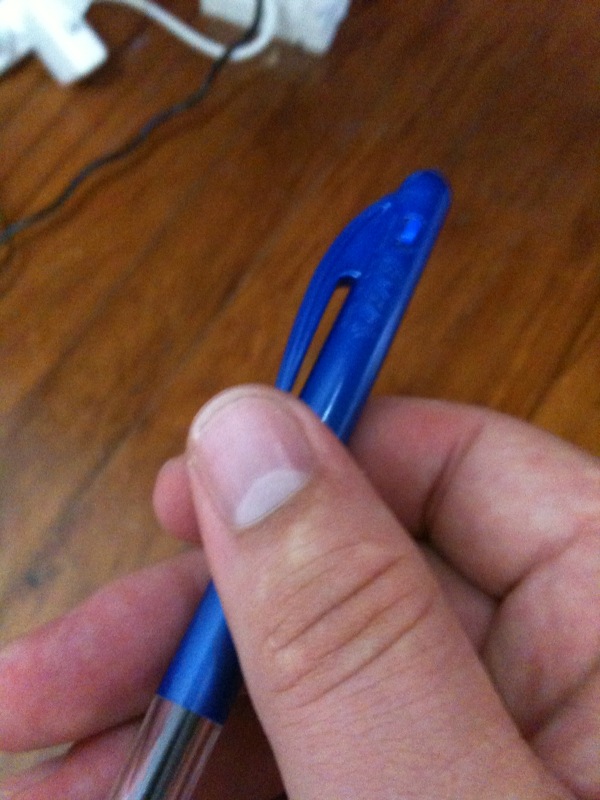
Rule #1: I am only allowed to write with a Blue Bic Pen.

Rule#2: I am only allowed one pen per quarter.  When it runs out of ink, I break it in half, throw it out (so I don’t pick up a pen that doesn’t work).

I picked up a box of blue bic pens (and do so every couple of years now).  In 5 years I’ve lost my pen twice (first time as I was quite sick and second time travelling).

Once you put the constraint that you only have one pen, if you loan a pen you expect it back, also if you pick up another kind of pen you realise immediately (hey this isn’t my pen) so put it down.

Also you actually keep a track of your one pen (ideally keeping on you most of the time).

That’s how I stopped losing Pens.  Slightly irrelevant but a nice little life hack.

February 24th, 2010

Risk

If you’re not making mistakes you’re probably not doing something worth your time.

February 23rd, 2010

What are you doing all the way down here? You could:
- View my about page
- Or for first timers the New Here? page
- Or maybe email this to a friend
- Or subscribe to get blog updates