How digital [ads] will change the tv experience

I was thinking about this last night – upon hearing the news of the Amazon set top box that’s rumored to release next week.

What happens when you have a fully digital tv experience, with ads you can engage with?

Here’s what happens:

1) Real Time Bidding
I was at an Ad:Tech session about this last year, their conclusion is that real time bidding won’t happen on Tv.  I disagree.  Once you can do real time bidding you’ll want to, to maximize the return.  There will be some nuances (i.e. tv shows advertising currently being booked out in advance) but over time brands will want to bid up certain times.

2) Advertising is going to flex in terms of time
I think ads will get shorter, more 6 second ads, more 15 second ads.  But then they’ll also get longer.  How? Well you’ll have the choice to find out more – which may take you on a journey that lasts 10-15 minutes.  I.e. imagine how you watch a streaming show, then click on an ad link go away explore that then come back.  This will come back to the tv.

3) Tv viewing will be on our terms
But there will also remain this idea of getting around the tv for a live event.  Why? Brands will capitalize on the monopoly of a time/place and want exclusiveness on that.  House of Cards – yes you can watch it all at once but you can only watch it when they first launch it – they still control that release.

4) More and more behind the scenes
The same way as the internet feeds those that seek more information – tv shows will have more behind the scenes; interviews, live tweets from the crew.  Fans will be able to get richer & deeper relationships with the shows they love.

5) Scripted vs reality?
I think these trends will continue but as before you will get greater involvement and ability to participate in the tv shows.

6) Responsive tv formats
The same way the web has developed a responsive theme for handling websites across different viewing screens, technology methodologies will evolve so you can do this much easier and be aware at the production end how it’s going to work in the different formats.  When shooting for mobile you don’t get the same impact with the ratios you use for tv.

7) Digital will be in the content
I think rather than overlays, digital ads will be like regular ad breaks, in the content itself.  Product placement will continue its growth.  But I think overlays just interfere with the experience and richness of content.

8) Tv is a verb
Tv is becoming a verb really – for leaning back and enjoy a show.  Not lean forward on your laptop.  Tv is sitting down relaxing and consuming entertainment (whether it’s on your tablet, phone or laptop) but it’s that different mode of consuming content.  Content that is lean forward will have different rules apply.

What’s not gonna happen?
This is super subjective but here’s a few things discussed that I don’t think will happen and why.

On Screen Commerce
There’s a lot of discussion of on screen commerce – buy what you see.  I don’t see that flying, as media production in general try to use ambiguous or unbranded goods (other than product placement) to maintain focus on the story.  And product placement generally don’t want to advertise the fact they’ve paid to be in there.

Ad Overlays
I don’t think anyone wants to have ads overlay their Game of Thrones.

A true pay for no ads
Ads pay for 75% of tv costs and cover around 70% of the satellite costs to deliver content to you.  I just don’t see consumers willing to make up all of that gap when it can be subsidised by ads.  We even see Hulu doing this.  We will see more crowd funded intiatives though which I think will be the exclusion to the rule (see: Veronica Mars on KickStarter).

And that’s it.

Interesting food for thought, the future of tv, how it will change and what actually won’t change.  The biggest undercurrent in my mind is (and like any major societal change) that it will be as the next generation become decision makers in the production of tv – they’ll bring through the big change.
 

March 28th, 2014

Micro Services, the new trend in app startups

What I’m seeing a lot of is tools like customer.io, simple little web apps which let marketers pull together a unique combination of technology to improve what they’re doing.

What’s driving this trend?

  • More digital savvy marketers
  • API marketplace, if I can plug it in, I will
  • Startup infrastructure is good, billing, customer management, templates, allowing rapid development of your one key feature which makes you different
  • Virtually zero cost to entry
  • Ability to raise angel funds
  • Exit market

It’s great, every day I’m discovering another tool which we can plug and play, make what we do work harder.

March 24th, 2014

A Javascript CMS

A few years back, we had this insight at Y&S that in the first 90 days of a new client we weren’t consistently getting the same data.  The reason for that was the process of getting tracking code installed.  In those days nobody had Analytics installed – over time this was less of an issue.

The reasons they weren’t often installed were:

  • It sometimes took a few revisions to get the code in all the right places, or tracking correctly.
  • IT Departments would sometimes stall saying it took too long (15 minutes) to install it or raise security concerns.  This slowed us down whenever we needed to put additional code like conversion tracking.

So what we did is came up with the idea of Javascript CMS, you would install one piece of javascript, everywhere.  And then over time we could add extra code, depending on the page.  We however kept running into security concerns around multiple pieces of javascript and detecting the URLs.  So we parked it for a while.

Others clearly had the same insight as within a year there were multiple players and Google released Tag Manager – what they’d done is made a few compromises to get it worked.  But hey it worked!

Our learnings from that were that we were confident of the insights, we needed to scratch up on some of our development skills to crack some of these bigger problems.

I share this story, as people do forget that behind every project that gets a green light are a few which didn’t and it’s not often because they’re bad ideas, it’s for a whole bunch of other reasons.  You just need to stick with it and realise this process of creating new things is one of ups, downs, sideways but the process creates new ideas… just not every one.. .so stay committed to the process because it does work.

March 19th, 2014

I don’t know much about art but I know what I like

I was at SxSW last week and really enjoyed the Adam Savage (of Mythbusters fame) talk on Art and Science.

He shared a story, that his father (a painter) said that this statement was the most profound about art.

Art is only about what you like he said.

I liked this – we can worry about whether what we like or not like is accepted across Art.  But really all that matters is what we do like, the commonality in our expression of the art is ourselves, we are the filter or curator of what we like.

That’s what makes all our homes and personal spaces unique – it’s us as the filter to it.

In a world of bits and bits it’s nice to know we can still put our own little stamp on the world.  Ironically that’s the exact point of art!


March 13th, 2014

Innovation always starts out looking like a bad idea

I loved this quote shared by Ben Horowitz last night at a Columbia University held launch for his new book.

The whole hour of Q&A was pretty good, he touched on Leadership, the struggle of being the entrepreneur making the change, being courageous.

It was really good – put me in good stead for his book: The Hard Thing about Hard Things which I’m about to start.

He went on to say, that if [the innovation] looked like a good idea it would already have been done.  True innovation looks like a good idea.

It reminded me of a Peter Thiels advice ‘tell me something thats true but nobody agrees with’…  at Forbes.  It’s a great piece of advice when you think about it, let it settle in.

These are all just good reminders that things worth doing start somewhere out there alone and over time grow the crowd around them.  Being a leader is taking the courage to make that step and then bringing people along with you.

March 5th, 2014

My business card experiment

When I first started out in business I thought I’d do away with business cards – they were old school.

Then I realised over time what an efficient mechanism for sharing details but also it’s a nice way to express mutual interest in following up. It’s not just the card but the swapping of cards which solidifies the intention of meeting again.

So whilst I tried to do without them, I got them in the end.

And yes I got good ones.

Not this kind though.  More like this one.

March 4th, 2014

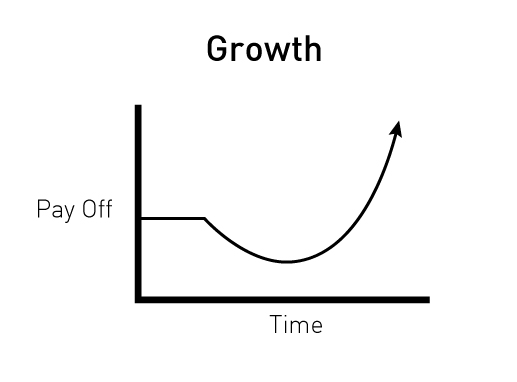
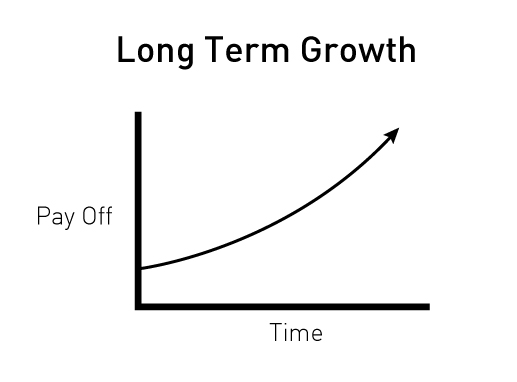
The Two Phases of Growth

There are essentially two periods of growth: investment and payoff.

You’ve just got to remind yourself where you are on the curve, in a place of investing or pay off.
growth
Then secondarily to remind yourself of the macro effect, long term growth is about hundreds, thousands of the little pieces of growth.long-term-growth
 
And finally, growth now – you get to reap that benefit for your life minus today.  The longer you leave it, the less you & most importantly the world get to benefit from your growth.  You kind of owe it to yourself to keep at it.


March 3rd, 2014

In pursuit of perfection

According to Wikipedia: Perfection is, broadly, a state of completeness and flawlessness.

I think at the start of any project people seek this out.

You want it to be ideal.

But in the growth of a project, things get messy, paradoxes grow and exist, the pursuit of perfection is exactly that – an ongoing pursuit.  A day in day out looking to improve.

But you’ve got to realise it is that, don’t fret but embrace that it won’t be quite perfect. At least not forever!

February 28th, 2014

Kill your best material

Moving to NY I’ve been getting more into the local comedy scene, by that I mean the consumption of not the contribution. Although the dollars in the door is a contribution of sorts.

There are a lot of analogies in the joke writing process, Chris Rock notably tests his material in indie stand up venues before taking them large, Seinfeld edits his over time but focuses on always writing and perfecting a joke but Louis CK has an interesting one.

He evolves his season to season but what he does is to disarm himself of his best material he does last years closing joke first. That means he’s put his absolute best material up front and so… he needs to top it. He needs to do better, he needs to work harder on it…. and he’s got absolutely no choice.

Because if he doesn’t…. he’ll bomb.

What I like is that each have their own little processes that work best with their jokes, their personalities & style.

It’s very similar to the business rule of only hiring people smarter than yourself. It means over time the organization (or set) only gets better and better.

Killing your best material to lift the game… again.

February 27th, 2014

The best returns

I’ve been tuning in to the live stream of Launch.co, todays the last day.

Earlier they had a great panel with Angel investors, this quote by Naval Ravikant stood out to me:

“the best returns in life come from compound interest”

Couldn’t agree more.

February 26th, 2014

Reasons not to

There’s always reasons not to do something

  • It’s too big
  • It’s too hard
  • It might not work
  • People might see me

Reasons not to are for people that won’t end up knocking off that lofty goal.

You just want to find the reasons to do it.

And put that on the wall – whilst you tackle the goal.

February 25th, 2014

Inefficient code leads to inefficient use of electricity

I’m streaming launch festival today, and Kanishk Parashar of Coin was speaking – talking about why what they’re working on hasn’t already been done.

One thing he noted was “writing code that is low energy as well” – efficient code with low power hardware i.e. bluetooth.

That reminded me of an article my good friend Dan Heier sent me, focused on Sustainable Web Design, that is it looks at the real cost of serving up a web page.  I.e. A 2008 paper from the Lawrence Berkeley National Laboratory suggests it takes 13kWh to transmit 1GB!

Apple is focused on this as well building an energy score on apps in Maverick – meaning you can see what impact an application has on your battery life.

Worth thinking about, how does our code impact the power consumption at the other end and what’s the real cost of that?


February 24th, 2014

Future Proofing

There’s a balance, how much is too much?

Really as far as the conceivable future is enough.

When you start trying to build for all eventualities it’s too tough.

Work to what you’re 80% confident of.  Anymore beyond that’s probably getting a bit too expensive.

February 21st, 2014

Business as a Wiki

The power of the Wiki is in the fact that we can all contribute.  If it’s not right we can fix it.  Or if it’s controversial we can debate it.

Also the end result is clear, better sharper knowledge for all to access.

So you have a community of people motivated around achieving that goal, in a way they can all positively contribute.

It’s a great metaphor for how businesses should be fun, a clear goal for all and a clear way for everyone to contribute in a constructive way against that.  Most businesses are geared that way but don’t embrace the participation part, everyone should know how they add to the overall goal and how their peers also contribute.


February 20th, 2014

How Seinfeld keeps writing

What he does is draws up a calendar of boxes, each box represents a day he has to write, once he writes a joke that day, he can put a cross through it, after a while his job becomes trying to extend that daisy chain of boxes because you don’t want to break it.

He’s gamified his own writing!  By focusing on extending the chain, not the writing, he’s sidestepped the all too common writers block.  Nice hack.

..

Reminded of this whilst reading Steal Like an Artist.  More on Seinfelds hack here.

February 19th, 2014

What are you doing all the way down here? You could:
- View my about page
- Or for first timers the New Here? page
- Or maybe email this to a friend
- Or subscribe to get blog updates